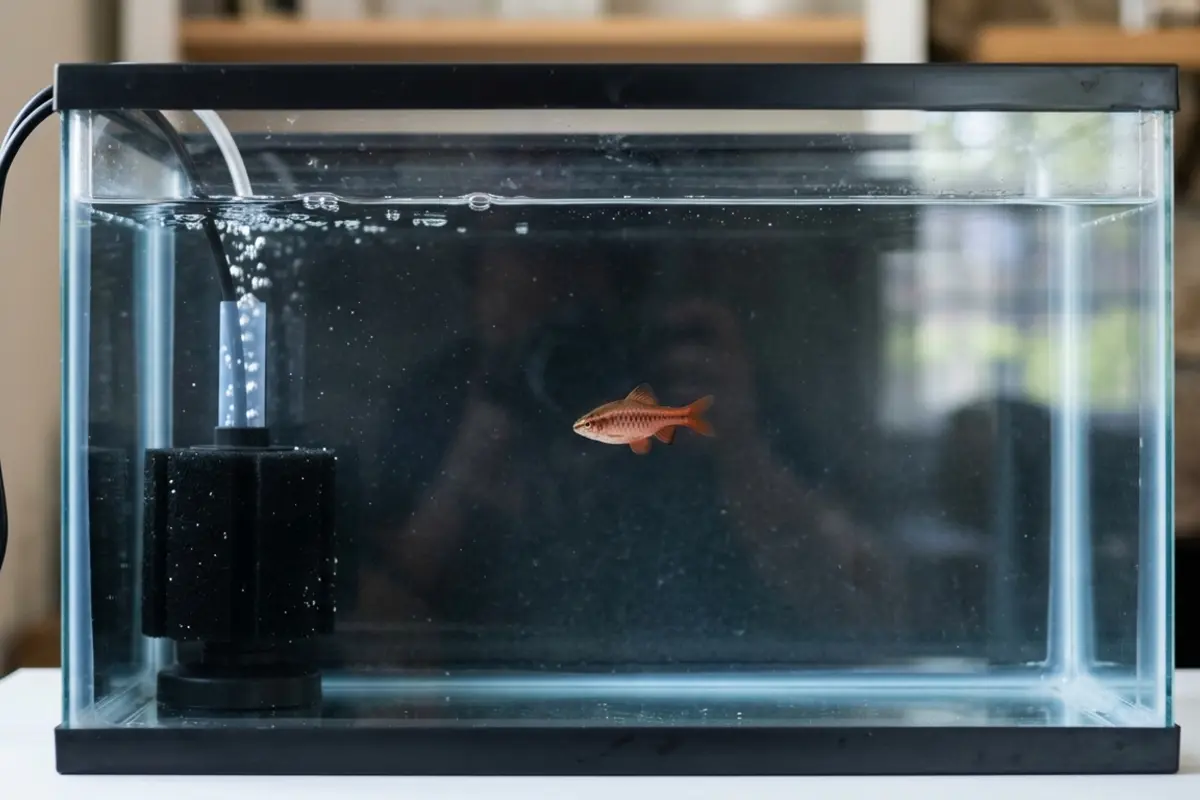
How to Set Up a Quarantine Tank (And Why You Need One)
Every fish disease outbreak is preventable. The solution is simple: quarantine new arrivals before adding them to your main tank. This isn't optional equipment if you want to keep fish long-term. One infected fish can wipe out an entire tank in days. A basic quarantine setup costs under $50 and saves you from losing hundreds of dollars worth of fish.
01
Why a Quarantine Tank Is Non-Negotiable
Fish diseases spread faster than you can react. Ich can infect every fish in a 50-gallon tank within 48 hours of introduction. Bacterial infections kill fish overnight. By the time you notice symptoms in your main tank, it's often too late to save everyone.
New fish are the primary disease vector. Pet stores cycle hundreds of fish through small systems weekly. Cross-contamination is unavoidable. Even reputable stores can't guarantee disease-free fish because many diseases have asymptomatic carriers.
Live plants and equipment from other tanks also carry pathogens. Ich parasites survive on wet surfaces for hours. Bacteria and fungi travel on plant roots and decorations. Used equipment from Craigslist or fish club swaps often harbors dormant diseases.
Your main tank is vulnerable because fish live in a closed system. One sick fish contaminates the entire water volume. Healthy fish have nowhere to escape exposure. Stress from disease outbreaks weakens immune systems and creates secondary infections.
Ich and bacterial infections are the most common killers. Ich appears as white spots and spreads rapidly at warm temperatures. Bacterial infections cause fin rot, body lesions, and internal organ damage. Both diseases are preventable with proper quarantine protocols.
The math is simple: lose one fish in quarantine or risk losing 20 fish in your main tank. Most aquarists learn this lesson the hard way after their first major outbreak. Don't be one of them.
02
What Equipment You Need
A quarantine tank requires minimal equipment to function effectively. You don't need expensive gear or perfect aesthetics because this is a temporary medical facility, not a display tank.
Tank size depends on your fish. A 10-gallon tank works for most community fish under 4 inches. Use 20 gallons for larger fish like angelfish or cichlids. Plastic storage containers work fine if glass tanks exceed your budget.
Sponge filters are perfect for quarantine because they cycle quickly and won't harm sick fish. Hang-on-back filters create too much current for stressed fish. Canister filters are overkill and expensive for temporary setups.
A basic aquarium heater maintains stable temperature. Sick fish cannot regulate body temperature effectively, making them more sensitive to temperature swings. Use an adjustable heater rated for your tank size.
Skip the substrate completely. Bare bottom tanks are easier to clean and monitor. You can spot uneaten food, waste, and medication residue immediately. Substrate harbors bacteria and makes water quality management harder.
Omit decorations except for one hiding spot per fish. PVC pipe or a clean terracotta pot works perfectly. Too many decorations create dead spots where waste accumulates and diseases fester.
Lighting is unnecessary unless treating plants. Fish stress reduces under subdued conditions. Room lighting provides enough illumination to monitor fish behavior and appetite.
Total setup cost ranges from $30-50 for a complete 10-gallon quarantine system using budget equipment.
Aquaneat Aquarium Bio Sponge Filter (3-Pack)
Comes with three sponges so you can keep one cycled in your main tank filter. Gentle flow won't stress sick fish.
03
How to Cycle a Quarantine Tank Fast
Traditional cycling takes 4-6 weeks, but you can cycle a quarantine tank in 24-48 hours using seeded filter media from your established tank.
Squeeze sponge filter media from your main tank into the quarantine tank to transfer beneficial bacteria. One good squeeze releases millions of bacteria that immediately begin processing ammonia and nitrite.
Place a piece of filter media from your main filter into the quarantine filter compartment. Ceramic rings, bio balls, or sponge material all work. This provides a constant bacterial colony that processes waste as soon as fish arrive.
Run the quarantine filter continuously, even when empty. Bacteria die within 24-48 hours without ammonia to feed on. Feed the system with fish flakes every few days if no fish are present. The decaying food provides ammonia for bacterial metabolism.
If starting from scratch without an established tank, use bottled bacteria products like Seachem Stability or API Quick Start. Add the recommended dose daily for one week before introducing fish.
Test water parameters daily during the first week. Ammonia should stay below 0.25 ppm and nitrite below 0.5 ppm. Higher levels indicate insufficient bacterial colonization and require immediate water changes.
Maintain quarantine water temperature at 76-78°F to keep bacteria active. Cold water slows bacterial reproduction and ammonia processing. Hot water above 85°F can kill beneficial bacteria colonies.
Do not clean or replace filter media during active quarantine periods. Cleaning disrupts bacterial colonies and can crash the cycle when fish need it most. Rinse lightly in tank water only if flow becomes restricted.
API Freshwater Master Test Kit
Essential for monitoring ammonia and nitrite during quarantine. Liquid tests are more accurate than strips for sick fish.
04
The Quarantine Protocol: What to Do With New Fish
Proper quarantine starts the moment you bring fish home from the store. Every step matters because disease symptoms often don't appear for several days after infection.
Float the transport bag in quarantine water for 15 minutes to equalize temperature. Sudden temperature changes shock fish and weaken their immune systems. Temperature differences greater than 5°F can kill fish outright.
Never add store water to your quarantine tank. Pet store water contains fish waste, medications, and potential pathogens from hundreds of other fish. Use a net to transfer fish only, discarding all transport water.
Observe fish behavior immediately after introduction. Healthy fish swim actively and explore their new environment within hours. Sick fish hide continuously, gasp at the surface, or display erratic swimming patterns.
Feed sparingly for the first 48 hours. Stress reduces appetite and overfeeding pollutes water quickly in small quarantine systems. Offer small amounts twice daily and remove uneaten food within 15 minutes.
Watch for visible disease signs daily. Ich appears as tiny white spots resembling salt grains. Fin rot shows as frayed or dissolving fin edges. Fungal infections look like white cotton patches. Bacterial infections cause red streaks, body lesions, or cloudy eyes.
Monitor swimming patterns and breathing rate. Fish with parasites scratch against surfaces or flash repeatedly. Rapid gill movement indicates breathing difficulty from gill parasites or poor water quality.
Maintain quarantine for 2-4 weeks minimum. Most diseases show symptoms within 14 days, but some bacterial infections remain dormant longer. Extended observation catches delayed outbreaks that shorter quarantine periods miss.
Quarantine length depends on fish source and species. Wild-caught fish need 4 weeks minimum due to higher parasite loads. Captive-bred fish from reputable breeders may need only 2 weeks.
05
How to Treat Disease in Quarantine
Quarantine tanks serve as both observation and treatment facilities. Catching diseases early in quarantine prevents tank-wide outbreaks and saves fish lives.
Treat at the first sign of symptoms, not after diseases progress. Early intervention improves success rates dramatically. Waiting for definitive diagnosis allows diseases to become established and harder to cure.
For ich treatment, raise temperature to 86°F gradually over 48 hours while increasing aeration. Heat accelerates the ich lifecycle and kills free-swimming parasites. Maintain this temperature for 14 days to ensure complete elimination.
Bacterial infections require antibiotic medications like Seachem Kanaplex or API Fin and Body Cure. Remove activated carbon from filters before medicating because carbon absorbs medications and makes treatment ineffective.
Fungal infections respond to antifungal treatments like Seachem PolyGuard or API Fungus Cure. These medications often turn water blue or green temporarily but won't harm fish at correct dosages.
Perform 25% water changes every other day during treatment to maintain water quality and remove medication buildup. Replace the exact amount of medication removed during water changes.
Never combine multiple medications unless specifically directed by product instructions. Drug interactions can poison fish or reduce treatment effectiveness. Treat one condition at a time.
Monitor fish behavior during treatment for medication stress signs including gasping, loss of coordination, or color changes. Reduce medication dosage by half if stress symptoms appear.
Continue feeding lightly during treatment unless fish refuse food completely. Nutrition supports immune function and recovery. Remove uneaten food quickly to prevent water quality problems during medication periods.
Hikari Ich-X
Safe for scaleless fish and won't harm beneficial bacteria. Works faster than salt treatment alone.
06
After Quarantine: Moving Fish to the Main Tank
Successfully completing quarantine doesn't guarantee fish health forever. The transfer process requires careful attention to prevent stress-related disease outbreaks.
Wait for complete symptom resolution before transfer. Fish should eat normally, swim actively, and show no visible signs of disease for at least one week after treatment completion. Rushing transfer risks relapses.
Acclimate fish to main tank water parameters slowly. Test pH, temperature, and hardness in both tanks. Differences greater than 0.2 pH units or 3 degrees Fahrenheit require gradual adjustment over several hours.
Float fish in a bag of quarantine water inside the main tank for 20 minutes. Add small amounts of main tank water to the bag every 10 minutes until water parameters match. This prevents osmotic shock during transfer.
Never add quarantine tank water to your main system. Even successfully treated water may contain medication residues or dormant parasites. Transfer fish only using a clean net.
Introduce new fish during daylight hours when you can monitor behavior. Territorial fish may attack newcomers, requiring immediate intervention. Watch for excessive chasing or fin damage in the first 24 hours.
Feed all fish in the main tank before adding newcomers. Well-fed fish are less aggressive and more accepting of new additions. Skip feeding for 24 hours after introduction to reduce waste production during the adjustment period.
Monitor the entire tank for disease symptoms over the following week. Stress from new additions can trigger outbreaks in previously healthy fish. Watch for ich, fin rot, or behavioral changes in both new and existing fish.
Clean and store quarantine equipment properly for future use. Rinse tanks and filters with diluted bleach solution, then dechlorinate thoroughly before storage. Maintain filter bacteria by running empty tanks with occasional fish food additions.
Table of Contents
Related Content
Popular Fish Species
Essential Gear
Best Filter for a 5 Gallon Fish Tank
AquaClear 20 Power Filter
Best Aquarium Test Kit for Freshwater Tanks
API Freshwater Master Test Kit
Frequently Asked Questions
Not sure what you're treating?
Match what you're seeing on the fish to the most likely cause before reaching for medication.
Open the fish symptom guide →A note on fish health advice
TankMinded shares guidance based on common hobbyist practice and published aquarium literature. We're not veterinarians. Individual cases vary, medications can interact with water chemistry in unpredictable ways, and advanced or persistent illness calls for an aquatic vet — the AAFV directory is a good place to start. Follow any treatment at your own discretion.