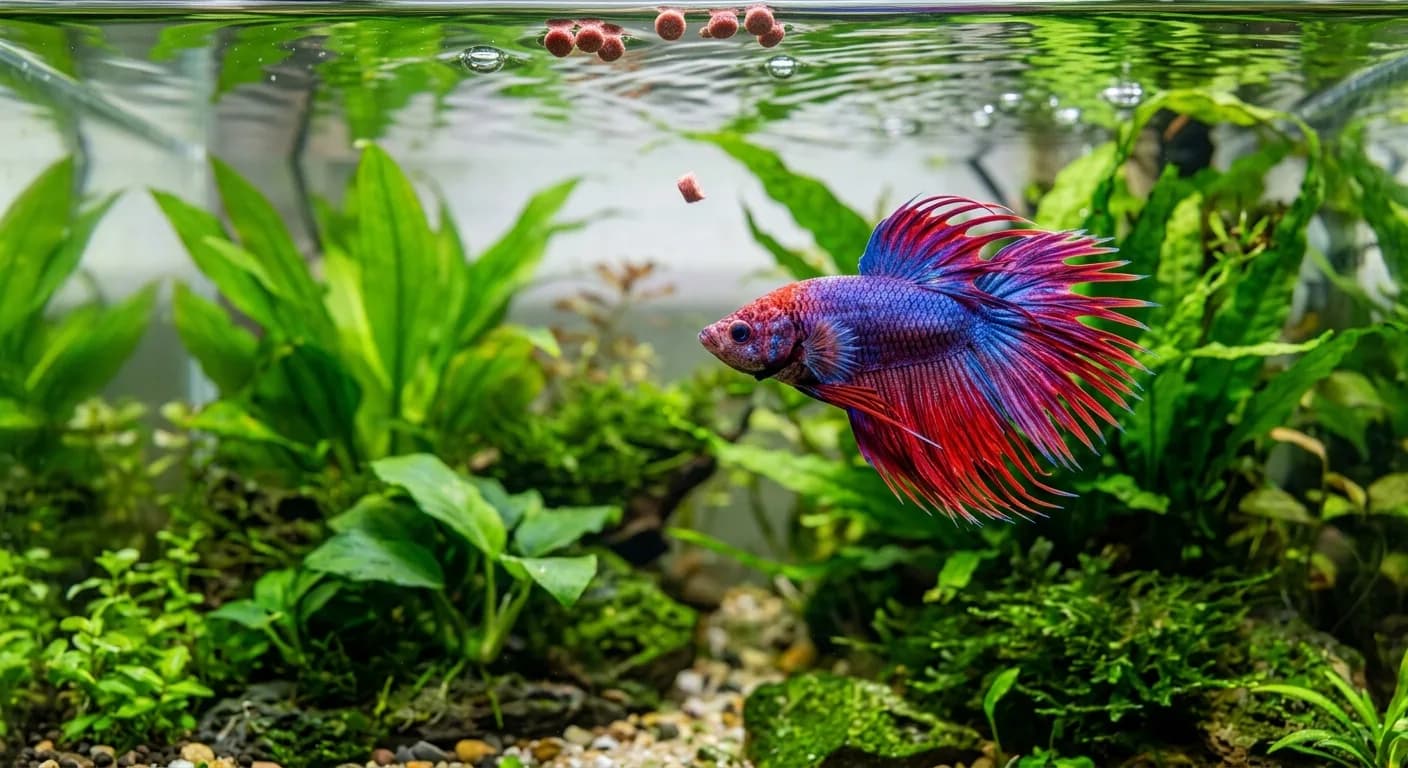
Best Betta Fish Food: What Works
Bettas are carnivores. In the wild they eat insects, insect larvae, and small invertebrates. A diet of cheap wheat-and-corn flakes is the wrong food for them, and long-term it shows: dull color, low energy, and more susceptibility to swim bladder problems. Feeding bettas properly is straightforward once you know what to look for.
01
Why Most Betta Food Falls Short
Most cheap betta foods list wheat flour or corn starch as the first or second ingredient. Bettas have short digestive tracts built for protein, not plant matter. High-carb foods pass through poorly digested, contribute to bloating and constipation, and do not support the color and fin quality that a protein-rich diet does.
Look at the ingredient list before buying. The first ingredient should be a named animal protein: fish meal, salmon meal, shrimp meal, or insect protein. If wheat, corn, or soy appears in the first three ingredients, skip it.
The price difference between decent betta food and bad betta food is about five dollars per container that lasts several months. This is not the place to cut costs.
02
Best Betta Pellets
Hikari Betta Bio-Gold is the standard recommendation and earns it. Shrimp meal is the first ingredient, pellets are sized correctly for bettas, and they float long enough for bettas to eat without diving to the substrate. Bettas consistently eat it without needing to be conditioned to it, which is not true of all pellet brands.
Feed 2-4 pellets per feeding, once or twice daily. Bettas will often beg for more, but their stomachs are about the size of their eye. Overfeeding bettas is genuinely easy and leads to bloating and water quality issues.
Omega One Betta Buffet pellets are a solid alternative. Salmon-based, similar protein content, slightly smaller pellet size which some bettas prefer. Worth having as a rotation food if your betta seems bored with one brand.
Hikari Betta Bio-Gold Pellets
Shrimp meal as the first ingredient, sized right for bettas, floats long enough for them to eat comfortably. The most consistent betta pellet available.
03
Frozen Foods: The Best Supplement
Frozen bloodworms and frozen brine shrimp 2-3 times per week make a noticeable difference in betta health and color. Most bettas eat them far more eagerly than dry food.
Bloodworms are high in protein and bettas consider them a preferred food. The caveat: feed sparingly. Two or three bloodworms per feeding, twice per week at most. Bloodworms are rich enough to cause digestive issues if fed daily, and constipation is a contributing factor in swim bladder disease.
Brine shrimp are a better everyday supplement than bloodworms. Lower fat content, higher natural vitamins, and accepted by virtually every betta. A small cube or portion 2-3 times per week is ideal.
Thaw frozen food in a small cup of tank water before feeding rather than dropping frozen cubes directly in. This prevents a rapid temperature drop in small tanks.
04
What to Avoid
Flakes are not well suited to bettas for two reasons. First, the ingredient quality is typically poor. Second, bettas often ignore food that sinks because they are surface feeders, and flakes sink once waterlogged. Most bettas end up eating very little of what you put in.
Freeze-dried bloodworms are popular but inferior to frozen. The freeze-drying process strips most of the moisture and a significant portion of nutritional value. If you feed freeze-dried bloodworms, soak them in tank water for a minute before offering them. Dry freeze-dried food can expand in the stomach and contribute to constipation.
Tropical community flakes are not toxic to bettas but are not appropriate as a staple. They are formulated for omnivorous community fish and have lower protein content than bettas need.
05
Feeding Schedule
One or two small feedings per day works well for adult bettas. 2-4 pellets per feeding is the right range. Many keepers do two feedings of 2 pellets each rather than one feeding of 4.
Fast bettas one day per week. This is standard practice and helps prevent the chronic overfeeding that leads to swim bladder issues. A healthy betta can go 2-3 days without food without any problem.
If your betta starts floating at the surface or struggling to swim normally after feeding, cut back on quantity immediately and skip a few days. Fasting for 2-3 days resolves mild swim bladder issues in many cases.
Table of Contents
Related Content
Popular Fish Species
Essential Gear
Best Aquarium Heater for Fish Tanks
Hitop Adjustable Aquarium Heater
Frequently Asked Questions
Sources & Further Reading
- Betta splendens — FishBase
Species profile including natural diet: invertebrates, insect larvae, and zooplankton.
- Siamese fighting fish — Wikipedia
Natural habitat, feeding ecology, and captive care overview.