Best Goldfish Food: Why Sinking Pellets Beat Flakes
Goldfish have a design problem: they are constantly gulping at the surface, which means floating food leads to excess air ingestion and swim bladder issues. Flakes make this worse because fish chase them at the surface and swallow air in the process. Sinking pellets and gel food solve the problem and produce noticeably healthier fish over time.
01
Why Food Format Matters for Goldfish
Swim bladder disorder is the most common long-term problem in captive goldfish, and diet is the biggest contributing factor. When goldfish eat at the surface, they ingest air along with food. Over time, repeated air ingestion disrupts the swim bladder and fish start floating sideways or struggling to maintain depth.
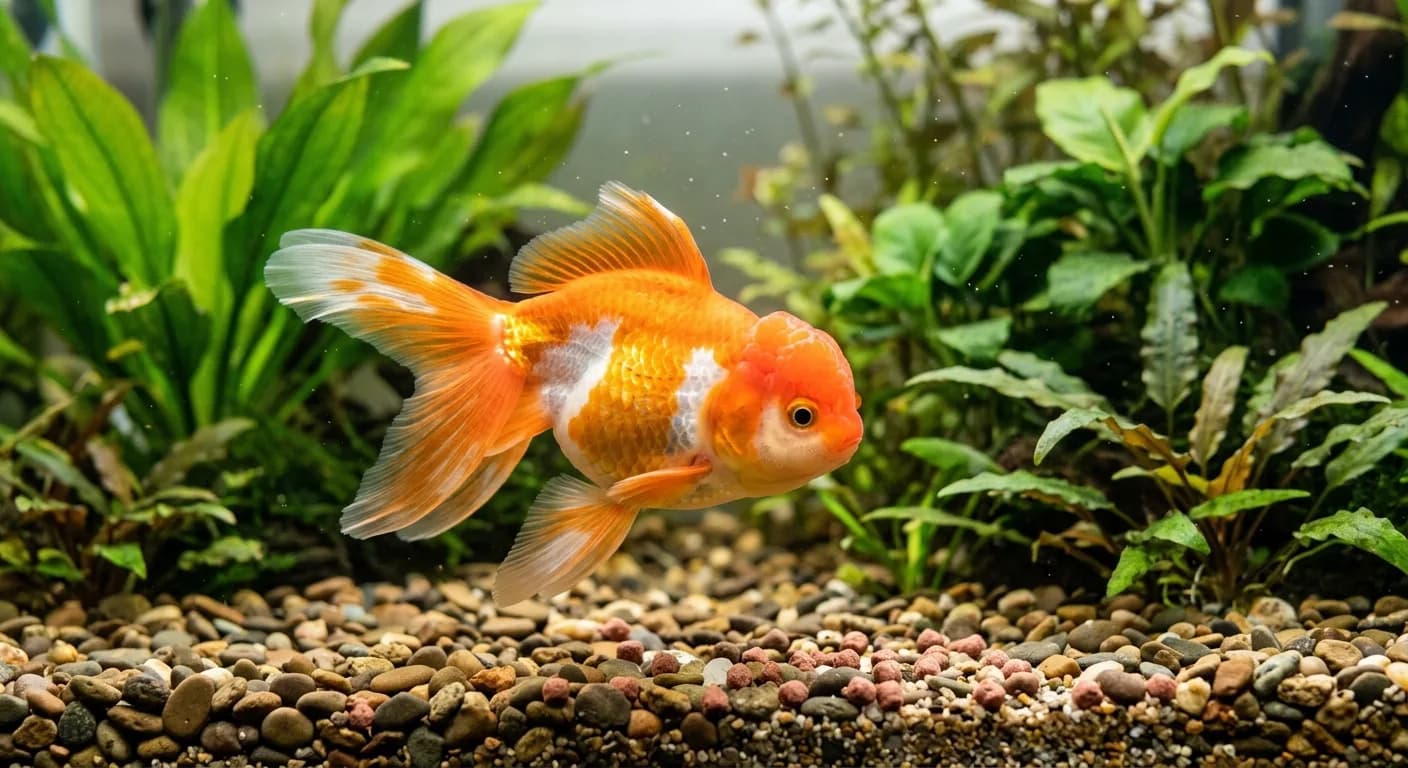
Fancy goldfish (orandas, ryukins, ranchus, telescope eyes) are more vulnerable than single-tail types like commons and comets. Their compressed body shape puts more pressure on internal organs, and their swim bladders are already less efficient. Floating food is especially problematic for them.
Sinking food forces goldfish to feed at mid-water or the substrate, the same way they feed naturally in ponds. Less air ingestion, less swim bladder stress.
Soaking any dry food for 30 seconds before feeding softens it and further reduces air intake.
02
Best Goldfish Pellets
Ultra Fresh Sinking Goldfish Food is the best dry option currently available. Shrimp as the first ingredient, no artificial colors or preservatives, and the pellets sink reliably without turning to mush. The smaller size works for both fancy and single-tail varieties. Color improvement is noticeable within a few weeks.
For feeding amounts, start with a small pinch and watch. Goldfish should eat everything within 3-4 minutes. They will beg convincingly for more at every feeding, but goldfish are high-bioload fish and overfeeding directly translates to ammonia spikes and poor water quality. Twice daily is sufficient.
Remove any uneaten food after 5 minutes. Goldfish are messy eaters and leftover food decomposes faster in their tanks because of the higher bioload.
Ultra Fresh Sinking Goldfish Food
Shrimp as the first ingredient, sinks reliably, no artificial dyes. Produces noticeably better color and reduces swim bladder stress compared to standard floating flakes.
03
Gel Food: The Best Option Most Keepers Ignore
Gel food is the closest thing to a complete goldfish diet. You mix a powder with hot water, it sets into a soft gel, and goldfish eat portions of it. It sinks, it is high in moisture, and you can pack it with vegetables and supplements.
The main brands are Repashy and Hikari gel food. Repashy's Super Gold formula is specifically designed for goldfish and contains spirulina, krill, and vegetable matter. Goldfish are omnivores that genuinely benefit from plant material in their diet, and gel food delivers it naturally.
The downside is preparation time: takes about 10 minutes to make a batch, and the gel keeps for 2 weeks in the refrigerator. For keepers with multiple goldfish or fancy fish they want to keep in peak condition, it is worth the effort.
Using gel food 3-4 days per week alongside quality pellets on other days is a reasonable schedule.
04
What Not to Feed Goldfish
Floating flakes are the main thing to avoid. Even if you soak them, they float back up and goldfish end up surfacing to eat. Standard goldfish flakes at pet stores are almost all floating and low quality. Avoid them as a staple.
Goldfish "color enhancing" flakes with artificial dyes are not dangerous but are not beneficial. Color in goldfish comes from genetics and quality protein in the diet, not from artificial colorants.
Tropical fish pellets are not designed for goldfish. Tropical fish need higher protein and warmer water parameters than goldfish. The nutritional balance is off. Use goldfish-specific food.
Bread, crackers, or human food should not be fed to goldfish. Goldfish cannot digest processed carbohydrates well and it contributes directly to constipation and swim bladder issues.
Peas (as a laxative) are commonly recommended for treating swim bladder issues. Feeding a blanched, skinned pea once or twice when a fish is constipated can help. Do not feed peas regularly as a staple.
05
Fancy vs Common Goldfish: Different Needs
Single-tail goldfish (common goldfish, comets, shubunkins) are more forgiving. They are closer to wild carp in body shape, swim normally, and handle a variety of foods without significant swim bladder issues. Floating food is less problematic for them, though sinking food is still better practice.
Fancy goldfish require more attention. Orandas, ranchus, ryukins, and bubble-eyes all have compressed bodies that predispose them to swim bladder problems. Sinking food, soaking before feeding, and avoiding overfeeding are more important for them than for common goldfish.
Fancy goldfish also need lower temperatures (65-72°F) than tropical fish but slightly warmer than cold-water pond goldfish. Temperature affects digestion: goldfish kept too warm eat more, produce more waste, and their systems run harder. Keep fancy goldfish in unheated tanks in a room temperature environment unless your house runs very cold.
Table of Contents
Related Content
Popular Fish Species
Essential Gear
Frequently Asked Questions
Sources & Further Reading
- Carassius auratus — FishBase
Species profile including natural diet: plants, small invertebrates, and detritus.
- Goldfish — Wikipedia
Natural history, care requirements, and dietary ecology of goldfish.